MemoHoney Official Website › Side Effects
Side EffectsMemoHoney side effects and the interactions worth naming
The effect most people will notice is a harmless skin tingle.
Beta-alanine causes paraesthesia across the face, neck or hands, starting within twenty minutes and fading inside the hour. Beyond that, the two things worth naming precisely are the nitric oxide pathway, which five of the six ingredients act on, and niacin's 35 mg daily ceiling.
Three specific effects, two specific interactions, and what a missing amount means for both.
The MemoHoney tingle, and why it happens
Paraesthesia from beta-alanine is the best-documented effect of any ingredient on this bottle. It is a prickling or flushing sensation, usually across the face, scalp, neck, chest or backs of the hands. It starts ten to twenty minutes after a dose, peaks quickly and is gone within the hour.
It is caused by beta-alanine activating sensory neurons in the skin, it is dose-related, and it is harmless. A 2019 systematic risk assessment and meta-analysis of oral beta-alanine found paraesthesia the only consistently reported effect in the literature, and concluded the doses used in the available research are not associated with harm.
Two practical notes. Taking the capsule with food usually blunts it. And its presence or absence is the only self-report clue this capsule gives about its own contents — a tingle means enough beta-alanine to cross the threshold, no tingle means less. That is not a measurement and it is better than nothing.
The MemoHoney interaction that matters most
Five of the six named ingredients — arginine, arginine AKG, citrulline HCl, citrulline malate and, indirectly, the arginine those produce — act on the nitric oxide pathway. So do nitrates prescribed for angina, and so do PDE5 inhibitors prescribed for erectile dysfunction and pulmonary hypertension.
Stacking them can lower blood pressure further than either would alone. A dose-response meta-analysis of randomised trials found oral arginine reducing blood pressure with a significant relationship between dose and the change in diastolic pressure, so this is not a theoretical concern dressed up as a warning.
The correct response is not to avoid the conversation. It is to tell the person who wrote the prescription what you are considering, before you start, and let them decide.
The VINTAGE MI trial tested L-arginine in patients recovering from a myocardial infarction and was stopped early because of higher mortality in the arginine group. That is a specific population, at a therapeutic dose, in a hospital setting. It is quoted here for one reason: it is the evidence that arginine is not automatically harmless, and it is why this desk names the pathway instead of repeating a general caution.
Niacin, the ceiling, and what MemoHoney not printing an amount means
The Institute of Medicine sets the adult tolerable upper intake level for niacin at 35 mg a day, based on flushing as the critical adverse effect. The adult RDA is 16 mg niacin equivalents for men and 14 for women.
Niacin flushing is a different phenomenon from the beta-alanine tingle and looks worse: a genuine reddening of the skin with warmth, mediated by prostaglandin release, described in a 2024 review. It is unpleasant rather than dangerous.
At pharmaceutical doses niacin is a different substance again. HPS2-THRIVE randomised 25,673 people to extended-release niacin and found serious adverse effects and no vascular benefit; the detailed adverse-event analysis catalogued them. There is also a published case of hepatotoxicity after someone took large doses of niacin for a non-medical reason. None of this is remotely in reach of a shared capsule.
What it does mean is that the unprinted amount is a real gap here. Niacin is in multivitamins, B-complexes, energy drinks and fortified cereal, and a reader trying to keep their total under 35 mg a day cannot, because one of the numbers is missing.
Less common MemoHoney reactions, and what to do about them
| What some people report | Most likely cause | What to do |
|---|---|---|
| Tingling face, neck or hands | Beta-alanine paraesthesia, dose-related and benign | Take it with food. It fades inside the hour and does not build up. |
| Warm flush with reddened skin | Niacin flushing rather than the beta-alanine tingle | Note it, add up the niacin in everything else you take, and take the capsule with food. |
| Stomach discomfort taken before breakfast | An empty stomach and a capsule of amino acids | Take it with the meal instead. A capsule taken daily beats a capsule taken perfectly. |
| Light-headedness on standing | Possibly blood pressure, given the pathway involved | Stop, and speak to a clinician, particularly if you take anything for blood pressure. |
| Nothing at all, ever | Entirely normal, and the most common report | Nothing. The absence of an effect in week one is not information. |
This is a list of what people describe, not a list of documented adverse reactions to this product. No trial of this formula exists.
When to stop taking MemoHoney and speak to somebody
- Any reaction that involves the mouth, tongue, throat or breathing. Stop, and seek help urgently. That is an allergy, not a tingle.
- A rash that spreads or persists past a few hours.
- Light-headedness or fainting, particularly on a blood-pressure medicine.
- Any change in vision, chest pain or a severe headache.
- Jaundice, dark urine, or pain under the right ribs. Very unlikely at supplement doses and worth knowing all the same.
- Memory that is getting worse rather than better while you take it. That is not a side effect and it is the most important item on this list.
Adverse reactions to supplements can be reported to the FDA through MedWatch, and doing so is how the pattern behind an individual report ever becomes visible.
Who publishes this MemoHoney website?
- Dolan E, Swinton PA, Painelli VS, et al. A Systematic Risk Assessment and Meta-Analysis on the Use of Oral beta-Alanine Supplementation. Adv Nutr. 2019;10(3):452-463. PMID 30980076. https://pubmed.ncbi.nlm.nih.gov/30980076/
- Trexler ET, Smith-Ryan AE, Stout JR, et al. International society of sports nutrition position stand: Beta-Alanine. J Int Soc Sports Nutr. 2015;12:30. PMID 26175657. https://pubmed.ncbi.nlm.nih.gov/26175657/
- Shiraseb F, Asbaghi O, Bagheri R, et al. Effect of l-Arginine Supplementation on Blood Pressure in Adults: A Systematic Review and Dose-Response Meta-analysis of Randomized Clinical Trials. Adv Nutr. 2022;13(4):1226-1242. PMID 34967840. https://pubmed.ncbi.nlm.nih.gov/34967840/
- Schulman SP, Becker LC, Kass DA, et al. L-arginine therapy in acute myocardial infarction: the Vascular Interaction With Age in Myocardial Infarction (VINTAGE MI) randomized clinical trial. JAMA. 2006;295(1):58-64. PMID 16391217. https://pubmed.ncbi.nlm.nih.gov/16391217/
- Institute of Medicine (US) Standing Committee on the Scientific Evaluation of Dietary Reference Intakes. Niacin. In: Dietary Reference Intakes for Thiamin, Riboflavin, Niacin, Vitamin B6, Folate, Vitamin B12, Pantothenic Acid, Biotin, and Choline. Washington (DC): National Academies Press; 1998. Adult RDA 16 mg NE/day (men) and 14 mg NE/day (women); Tolerable Upper Intake Level 35 mg/day, set on flushing. https://www.ncbi.nlm.nih.gov/books/NBK114304/
- Javaid A, Mudavath SL. Niacin-induced flushing: Mechanism, pathophysiology, and future perspectives. Arch Biochem Biophys. 2024;761:110163. PMID 39322100. https://pubmed.ncbi.nlm.nih.gov/39322100/
- HPS2-THRIVE Collaborative Group, Landray MJ, Haynes R, et al. Effects of extended-release niacin with laropiprant in high-risk patients. N Engl J Med. 2014;371(3):203-12. PMID 25014686. https://pubmed.ncbi.nlm.nih.gov/25014686/
- Haynes R, Valdes-Marquez E, Hopewell JC, et al. Serious Adverse Effects of Extended-release Niacin/Laropiprant: Results From the Heart Protection Study 2-Treatment of HDL to Reduce the Incidence of Vascular Events (HPS2-THRIVE) Trial. Clin Ther. 2019;41(9):1767-1777. PMID 31447131. https://pubmed.ncbi.nlm.nih.gov/31447131/
- Durham SH, Covington EW, Clemmons KJ. Hepatotoxicity upon using niacin to pass a drug test: A case report. J Am Pharm Assoc (2003). 2018;58(5):564-567. PMID 29941333. https://pubmed.ncbi.nlm.nih.gov/29941333/
- Dietary Supplements: What You Need to Know. Office of Dietary Supplements, National Institutes of Health. https://ods.od.nih.gov/factsheets/WYNTK-Consumer/
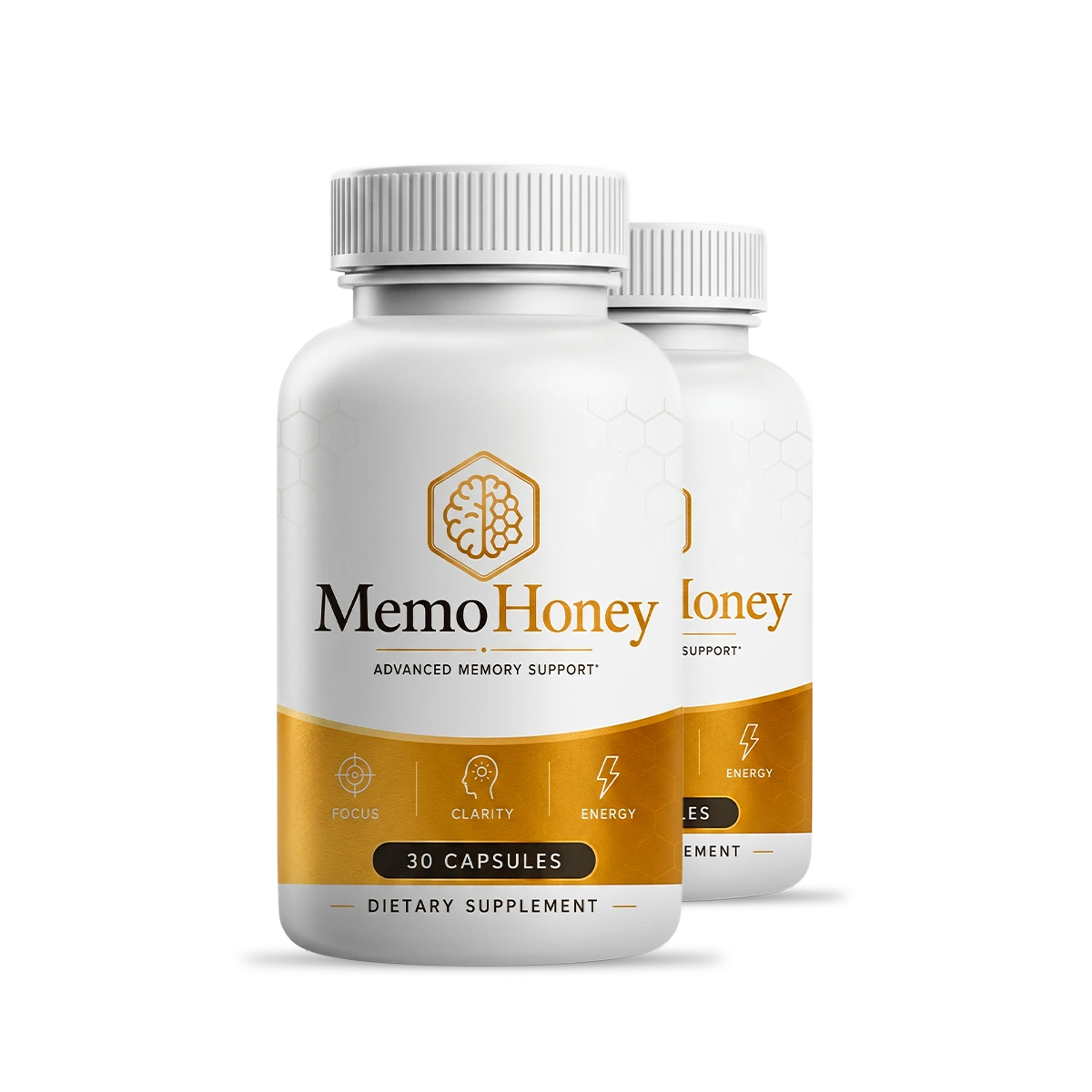
Order MemoHoney knowing what to expect from it
A harmless tingle in the first twenty minutes, a pathway worth mentioning to a prescriber, and 60 days to stop if it does not suit you.
Two bottles $158 · six bottles $294 · 60-day money-back guarantee
Order MemoHoney On The Official WebsiteOne capsule a day · 30 per bottle · lot MEM-26/ME-7725