MemoHoney Official Website › Memory Supplement Guide
Memory Supplement GuideThe memory supplement guide: what is on the shelf and what it rests on
The memory shelf is five ingredient families wearing different labels.
Nitric oxide amino acids, herbal nootropics, B vitamins, omega-3 fatty acids and cholinergics. Each has a different evidence base, a different characteristic dose and a different failure mode, and knowing which family a bottle belongs to tells you more than its name ever will.
Written about the category. It names ingredients this product does not contain and says where they are better evidenced.
Family one: the nitric oxide amino acids
Arginine, citrulline, and the salts of both. The reasoning is vascular: raise nitric oxide, improve the coupling between brain activity and brain blood supply, improve cognition. Every step of that is biologically real and the last one is where the evidence thins out.
The characteristic dose is grams. The 2016 citrulline cycling trial used 2.4 g a day, the oxygen-uptake work six, the citrulline malate trial eight in a single dose, and the arginine AKG trial twelve grams a day — and found nothing.
The cognitive literature for this family in humans is essentially empty. The best test of the underlying idea is a thirteen-week trial of escalating dietary nitrate, a more reliable route to the same pathway, in overweight and obese older adults: neither cognition nor cerebral blood flow moved.
This is the family MemoHoney belongs to. Five of its six named ingredients are in it.
Family two: the herbal nootropics
Bacopa monnieri, Ginkgo biloba, Panax ginseng, lion’s mane, rhodiola. This is the family with the longest randomised record in the category, and it is worth being clear that none of it is on this bottle.
Bacopa is the one most often cited for memory specifically, usually at 300 mg a day of a standardised extract over twelve weeks, and the trials that exist mostly measure delayed word recall. Ginkgo has been studied at scale in older adults with mixed and largely disappointing results at the prevention end.
A 2023 review of over-the-counter memory supplements covers this family in more depth than any retail page can, and anyone seriously shopping this shelf should read it before spending anything.
The failure mode of this family is extract standardisation. Two bottles both saying ‘bacopa 300 mg’ can contain quite different amounts of the compound the trials measured, and a label that does not name the standardisation is not comparable with one that does.
Family three: the B vitamins
B6, B12, folate and niacin. Two quite different arguments live in this family and they get confused constantly.
The first is deficiency. Severe niacin deficiency causes pellagra, whose third symptom is dementia, and B12 deficiency is a genuine and reversible cause of cognitive impairment that a blood test finds. Correcting a real deficiency is medicine and it works.
The second is supplementation in people who are not deficient, and that is a much weaker case. The Chicago Health and Aging Project is the strongest observational signal for niacin: 3,718 older adults, higher dietary intake associated with less incident Alzheimer’s disease and slower decline over a median 5.5 years. Dietary. Observational.
The failure mode here is a ceiling. The adult tolerable upper intake level for niacin is 35 mg a day, set on flushing, and B6 has its own limit for a more serious reason. A reader stacking a multivitamin, a B-complex and a memory formula can cross those without ever seeing a warning.
Family four: omega-3
EPA and DHA, from fish oil or algae. DHA is a structural component of neuronal membranes and the biological case is the most straightforward in the category.
Its characteristic dose is also the reason it is almost never a component of a blended memory capsule: a gram or more a day, as an oil. That does not share a capsule with five other things, which is why omega-3 is sold on its own in soft gels and why a memory blend claiming to include it is usually including a token amount.
Its failure mode is expectation. The large prevention trials in cognitively healthy older adults have been largely null, and the honest position is that it is a reasonable thing to have in a diet rather than a treatment for a memory complaint.
Family five: the cholinergics
Alpha-GPC, citicoline, huperzine A, and the various choline salts. The reasoning is neurotransmitter-level rather than vascular: supply more choline, support acetylcholine synthesis, support memory formation.
This family is the one that most often appears alongside a prescription-drug-adjacent name, and huperzine A in particular is a cholinesterase inhibitor with a mechanism shared by actual dementia drugs. That is an argument for caution rather than enthusiasm: an ingredient with a drug-like mechanism deserves a drug-like level of scrutiny, and it rarely gets one on a supplement label.
None of this family is on this bottle either.
Why so many labels on this shelf print no amounts
Three reasons, and only one of them is sinister.
Proprietary blends are legal. A manufacturer may declare a blend total rather than the amount of each component, and many do. It protects a formula from being copied, which is a real commercial concern.
Cost. The ingredients with the best evidence are frequently the most expensive per gram, and a label without numbers cannot be compared on cost per active gram with a label that has them. That is an advantage to whoever is spending less.
Physics. This is the one nobody says out loud. A capsule holds a finite amount of powder — four hundred to eight hundred milligrams for the common sizes — and several ingredient families have characteristic doses in the grams. Printing the numbers would make the arithmetic obvious, and the arithmetic is unflattering for any once-daily capsule containing six things.
None of that makes an unlabelled product bad. It makes it unevaluable, which is a different problem and in some ways a worse one.
| Ingredient | A characteristic trial dose | Capsules that would take |
|---|---|---|
| Beta-alanine | 2,400 mg/day | 3 to 6, depending on fill |
| L-citrulline | 2,400–6,000 mg/day | 3 to 15 |
| Citrulline malate | 8,000 mg | 10 to 20 |
| Arginine AKG | 12,000 mg/day | 15 to 30 |
| Bacopa extract | 300 mg/day | Under one |
| Niacin | 16–35 mg/day | A fraction of one |
Capsule counts assume 400-800 mg of fill per capsule shared between all ingredients. Trial doses are from the records cited on this page and, for bacopa, from the review cited above.
What actually moves memory, ranked honestly
| What | Evidence | Cost |
|---|---|---|
| Treating a real deficiency or illness | Strong. B12, thyroid, depression, sleep apnoea are all reversible causes. | An appointment |
| Sleep | Very strong. The largest single lever on next-day recall anyone has. | Free |
| Hearing, if it is going | Strong and badly under-appreciated. Untreated hearing loss makes conversation into guesswork. | A test, then aids |
| Exercise | Good. Consistent effects on executive function in older adults. | Free |
| Blood pressure control in midlife | Good, from long-term cardiovascular data. | Usually a prescription |
| Social contact and cognitive activity | Moderate, and hard to run a clean trial on. | Free |
| Supplements, as a group | Weak. The 2023 review found a category where marketing runs well ahead of trials. | $50–$300 a year |
This table is the least commercial thing on this website and it is the most useful.
Where this bottle sits on that shelf
MemoHoney is a family-one product with one family-three ingredient and one unusual addition.
Five of its six names are nitric oxide amino acids, whose cognitive evidence in humans is the thinnest of the five families. Niacin is the B vitamin, and it is the only ingredient here that can sit at a useful amount inside a capsule. Beta-alanine belongs to none of the five families and is the genuinely interesting choice: two small randomised trials at 2.4 g a day for ten weeks, in older adults scoring at or below normal, with a real result in that subgroup.
That combination is unusual and it is not obviously wrong. What it is not is checkable, because no amount is printed for any of it.
Not a new ingredient. Six numbers on a panel. Everything a reader cannot currently do — compare it with another bottle, work out the cost per active gram, add the niacin to the rest of the cupboard — becomes possible the moment those six numbers exist.
Who publishes this MemoHoney website?
- Hersant H, He S, Maliha P, et al. Over the Counter Supplements for Memory: A Review of Available Evidence. CNS Drugs. 2023;37(9):797-817. PMID 37603263. https://pubmed.ncbi.nlm.nih.gov/37603263/
- Babateen AM, Shannon OM, O'Brien GM, et al. Incremental Doses of Nitrate-Rich Beetroot Juice Do Not Modify Cognitive Function and Cerebral Blood Flow in Overweight and Obese Older Adults: A 13-Week Pilot Randomised Clinical Trial. Nutrients. 2022;14(5):1052. PMID 35268027. https://pubmed.ncbi.nlm.nih.gov/35268027/
- Marcal AL, Laranjinha J, Lourenco CF. Nitric oxide as a mechanistic link between metabolic dysfunction and cognitive decline in type 2 diabetes. Biochem Soc Trans. 2026;54(9):1239-1250. PMID 42746741. https://pubmed.ncbi.nlm.nih.gov/42746741/
- Suzuki T, Morita M, Kobayashi Y, et al. Oral L-citrulline supplementation enhances cycling time trial performance in healthy trained men: Double-blind randomized placebo-controlled 2-way crossover study. J Int Soc Sports Nutr. 2016;13:6. PMID 26900386. https://pubmed.ncbi.nlm.nih.gov/26900386/
- Bailey SJ, Blackwell JR, Lord T, et al. l-Citrulline supplementation improves O2 uptake kinetics and high-intensity exercise performance in humans. J Appl Physiol (1985). 2015;119(4):385-95. PMID 26023227. https://pubmed.ncbi.nlm.nih.gov/26023227/
- Perez-Guisado J, Jakeman PM. Citrulline malate enhances athletic anaerobic performance and relieves muscle soreness. J Strength Cond Res. 2010;24(5):1215-22. PMID 20386132. https://pubmed.ncbi.nlm.nih.gov/20386132/
- Willoughby DS, Boucher T, Reid J, et al. Effects of 7 days of arginine-alpha-ketoglutarate supplementation on blood flow, plasma L-arginine, nitric oxide metabolites, and asymmetric dimethyl arginine after resistance exercise. Int J Sport Nutr Exerc Metab. 2011;21(4):291-9. PMID 21813912. https://pubmed.ncbi.nlm.nih.gov/21813912/
- Morris MC, Evans DA, Bienias JL, et al. Dietary niacin and the risk of incident Alzheimer's disease and of cognitive decline. J Neurol Neurosurg Psychiatry. 2004;75(8):1093-9. PMID 15258207. https://pubmed.ncbi.nlm.nih.gov/15258207/
- Institute of Medicine (US) Standing Committee on the Scientific Evaluation of Dietary Reference Intakes. Niacin. In: Dietary Reference Intakes for Thiamin, Riboflavin, Niacin, Vitamin B6, Folate, Vitamin B12, Pantothenic Acid, Biotin, and Choline. Washington (DC): National Academies Press; 1998. Adult RDA 16 mg NE/day (men) and 14 mg NE/day (women); Tolerable Upper Intake Level 35 mg/day, set on flushing. https://www.ncbi.nlm.nih.gov/books/NBK114304/
- Ostfeld I, Ben-Zeev T, Zamir A, et al. Role of beta-Alanine Supplementation on Cognitive Function, Mood, and Physical Function in Older Adults; Double-Blind Randomized Controlled Study. Nutrients. 2023;15(4):923. PMID 36839281. https://pubmed.ncbi.nlm.nih.gov/36839281/
- Ostfeld I, Zamir A, Ben-Zeev T, et al. beta-Alanine supplementation improves fractional anisotropy scores in the hippocampus and amygdala in 60-80-year-old men and women. Exp Gerontol. 2024;194:112513. PMID 38971131. https://pubmed.ncbi.nlm.nih.gov/38971131/
- Using Dietary Supplements Wisely. National Center for Complementary and Integrative Health, National Institutes of Health. https://www.nccih.nih.gov/health/using-dietary-supplements-wisely
- Dietary Supplements: What You Need to Know. Office of Dietary Supplements, National Institutes of Health. https://ods.od.nih.gov/factsheets/WYNTK-Consumer/
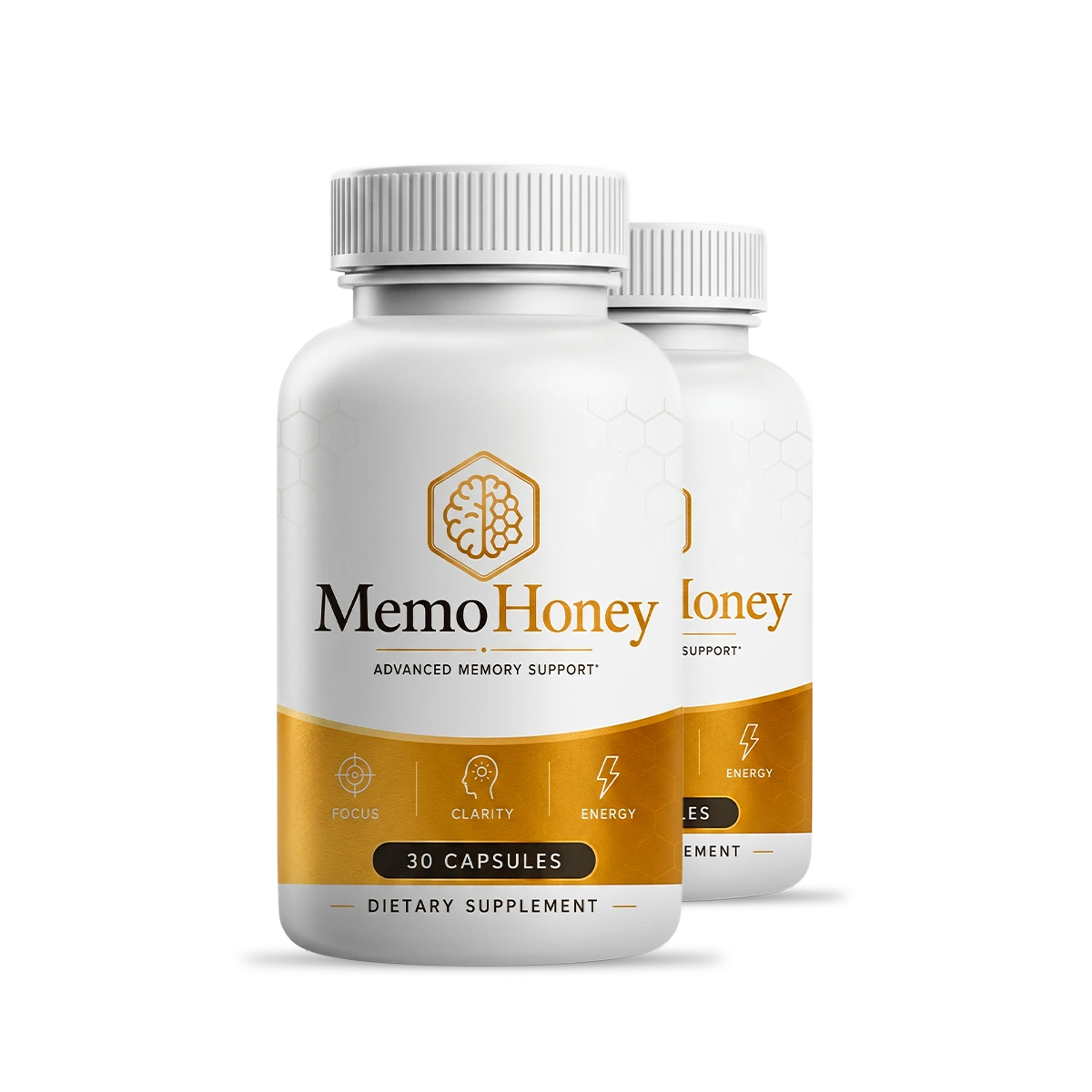
Order MemoHoney if it is the family you want
A nitric oxide formula with a carnosine precursor and a B vitamin, once a day, behind 60 days in which to find out whether it does anything for you.
Two bottles $158 · six bottles $294 · 60-day money-back guarantee
Order MemoHoney On The Official WebsiteOne capsule a day · 30 per bottle · lot MEM-26/ME-7725