MemoHoney Official Website › Choosing A Memory Supplement
Choosing A Memory SupplementChoosing a memory supplement: six questions, applied honestly
Six questions separate a formula worth paying for from one that is not.
Does it print amounts? Are those amounts the ones the trials used? Is the form the same one that was tested? How long would it take? What would stop you taking it? And what happens if it does nothing? The method is applied to this website's own product at the end, where it does not do well.
A method rather than a recommendation. It works on any bottle on this shelf, including ones this desk does not sell.
Question one: does the label print an amount for every active?
This is the first question because everything else depends on it. A label that names ingredients without amounts cannot be evaluated, compared or costed, and no amount of reading around it fixes that.
What a good label looks like: a Supplement Facts panel with a serving size, a servings-per-container figure, every active named with its amount in milligrams, a %DV column where one applies, and an other-ingredients line naming the capsule shell.
What a weak label looks like: a blend name with a single total, or a list of names with nothing beside them.
A proprietary blend is not automatically dishonest — there are real commercial reasons for one — but it moves all the risk onto the buyer, and it should move the price down rather than up.
Question two: is the amount the one the trials used?
This is where most of the shelf comes apart, and it is easy to check once the numbers are printed.
Find the ingredient’s best-known trial. Find the dose. Compare. The gap is frequently an order of magnitude, and a tenth of a trial dose is not a tenth of the effect — it is usually none of it.
Two ways this goes wrong that are worth naming. Pixie dusting is including an ingredient at an amount too small to do anything, purely so the name can appear on the front of the bottle. Borrowed credibility is quoting a trial in the marketing without mentioning that the trial used twenty times what the capsule contains.
The arithmetic that catches both is simple: a capsule holds four hundred to eight hundred milligrams of powder in total. If an ingredient’s trial dose is two grams and there are six ingredients in the capsule, the trial dose is not in there.
Question three: is it the same form that was tested?
Form matters more than most labels admit, and it is the question that catches products the first two miss.
A salt is not automatically equivalent to the free form: citrulline malate and citrulline hydrochloride deliver different amounts of citrulline per gram, and a label that does not say which one was weighed is ambiguous about its own dose.
A plant part is not interchangeable with another plant part. A leaf extract and a root extract of the same species can have entirely different chemistry, and trials are run on one of them.
A standardised extract is not the same as a raw powder. ‘300 mg of bacopa’ and ‘300 mg of bacopa standardised to 50 per cent bacosides’ are different products at the same weight.
The check: find what the trial used, in exactly those terms, and see whether the label says the same thing.
Question four: how long would this take, and does the pack cover it?
Most of this shelf works on timescales of weeks to months, and most buyers quit in week one. Those two facts together explain most of the disappointment in the category.
Find the trial length before you buy. The beta-alanine cognition trials ran ten weeks with a midpoint at five. Bacopa trials typically run twelve. The nitrate trial ran thirteen and found nothing, which is its own kind of answer.
Then compare that with the pack and the refund window. A thirty-day supply behind a fourteen-day refund window, for an ingredient whose trials ran twelve weeks, is a product you cannot fairly test before the money stops being refundable. That is worth noticing at the point of purchase rather than at the end of it.
| What to check | Good | Bad |
|---|---|---|
| Trial length for the lead ingredient | Stated or easy to find | Never mentioned in the marketing |
| Pack size against trial length | Pack covers the full period | Pack runs out before the trial length |
| Refund window against trial length | Window covers a fair test | Window closes before anything could have happened |
| Opened bottles | Included in the refund | Unopened only |
The fourth row is the one that quietly decides the other three. A window that excludes opened bottles is not a window.
Question five: what would stop you taking it?
Ask this before buying rather than after, because the answer is usually findable and occasionally important.
Interactions. Which pathway do the actives work on, and does anything you already take work on it too? Nitric oxide formulas and nitrates. Anything sedating and anything else sedating. Cholinesterase inhibitors and the real drugs that share the mechanism.
Ceilings. Does anything in it have a tolerable upper intake level, and does the label print enough to let you add it up? Niacin's is 35 mg a day for adults, and it is in more products than people realise.
Tolerability. What does it do that you will notice? A harmless beta-alanine tingle is fine once you know it is coming and alarming if you do not.
The shell. If you avoid gelatin, is the shell material named? On many labels it is not, and a vegetarian badge is not the same as a stated material.
Question six: what happens if it does nothing?
The most practical question of the six, and the one most often skipped.
Read the refund policy before the ingredient list. How long is the window? Does it start at purchase or at delivery? Are opened bottles included? Who pays return postage? Is there a phone number, and does it belong to the people who took the money?
A long window including opened bottles is worth more than any ingredient claim on the label, because it converts an unverifiable formula into a bounded bet. It is not evidence the product works — it is evidence the seller has calculated that few people will use it — but it moves the risk off the buyer, and on a shelf where nothing can be verified that is the main thing available.
- Sixty days or more, including opened bottles, is good.
- Thirty days from delivery is workable for a fast-acting product and not for this category.
- Unopened-only is not a refund policy for a supplement.
- No telephone number is a warning sign on its own.
- A window shorter than the trial length of the lead ingredient means the product cannot be fairly tested inside it.
The method applied to the product this website sells
| Question | How MemoHoney does | Verdict |
|---|---|---|
| 1. Amounts printed? | No. Six ingredients named, no milligram figure for any, and no Supplement Facts panel in the material this desk holds. | Fails |
| 2. Amounts match the trials? | Unanswerable, because of question one. What can be said is that five of the six have trial doses in grams a day and a capsule holds well under a gram in total. | Fails on the arithmetic |
| 3. Right form? | Partly. Citrulline HCl and citrulline malate are both forms the literature uses; beta-alanine and niacin are the plain forms the trials used. | Passes |
| 4. Time, pack and window? | The published trials ran ten weeks. The smallest pack is sixty days and the window is 60 days from purchase, opened bottles included. | Passes, tightly |
| 5. What would stop you? | The nitric oxide pathway is named on this site, niacin's 35 mg ceiling is named, the beta-alanine tingle is described. The capsule shell material is not stated anywhere. | Mostly passes |
| 6. If it does nothing? | 60 days from purchase, opened bottles included, one phone number, buyer pays return postage. | Passes |
Four passes and two failures, and the two failures are the first two questions, which are the ones that matter most.
That is an uncomfortable table for a page on a retail website and it is printed anyway, because a method that is only applied to other people’s products is not a method.
What it leaves a reader with is a specific decision rather than a general impression: MemoHoney is a routine and a bet, behind a window long enough to make the bet bounded. Anyone who needs to know what they are taking, in milligrams, should buy something else, and this page is the one that says so.
Who publishes this MemoHoney website?
- Ostfeld I, Ben-Zeev T, Zamir A, et al. Role of beta-Alanine Supplementation on Cognitive Function, Mood, and Physical Function in Older Adults; Double-Blind Randomized Controlled Study. Nutrients. 2023;15(4):923. PMID 36839281. https://pubmed.ncbi.nlm.nih.gov/36839281/
- Babateen AM, Shannon OM, O'Brien GM, et al. Incremental Doses of Nitrate-Rich Beetroot Juice Do Not Modify Cognitive Function and Cerebral Blood Flow in Overweight and Obese Older Adults: A 13-Week Pilot Randomised Clinical Trial. Nutrients. 2022;14(5):1052. PMID 35268027. https://pubmed.ncbi.nlm.nih.gov/35268027/
- Institute of Medicine (US) Standing Committee on the Scientific Evaluation of Dietary Reference Intakes. Niacin. In: Dietary Reference Intakes for Thiamin, Riboflavin, Niacin, Vitamin B6, Folate, Vitamin B12, Pantothenic Acid, Biotin, and Choline. Washington (DC): National Academies Press; 1998. Adult RDA 16 mg NE/day (men) and 14 mg NE/day (women); Tolerable Upper Intake Level 35 mg/day, set on flushing. https://www.ncbi.nlm.nih.gov/books/NBK114304/
- Hersant H, He S, Maliha P, et al. Over the Counter Supplements for Memory: A Review of Available Evidence. CNS Drugs. 2023;37(9):797-817. PMID 37603263. https://pubmed.ncbi.nlm.nih.gov/37603263/
- Suzuki T, Morita M, Kobayashi Y, et al. Oral L-citrulline supplementation enhances cycling time trial performance in healthy trained men: Double-blind randomized placebo-controlled 2-way crossover study. J Int Soc Sports Nutr. 2016;13:6. PMID 26900386. https://pubmed.ncbi.nlm.nih.gov/26900386/
- Perez-Guisado J, Jakeman PM. Citrulline malate enhances athletic anaerobic performance and relieves muscle soreness. J Strength Cond Res. 2010;24(5):1215-22. PMID 20386132. https://pubmed.ncbi.nlm.nih.gov/20386132/
- Willoughby DS, Boucher T, Reid J, et al. Effects of 7 days of arginine-alpha-ketoglutarate supplementation on blood flow, plasma L-arginine, nitric oxide metabolites, and asymmetric dimethyl arginine after resistance exercise. Int J Sport Nutr Exerc Metab. 2011;21(4):291-9. PMID 21813912. https://pubmed.ncbi.nlm.nih.gov/21813912/
- Using Dietary Supplements Wisely. National Center for Complementary and Integrative Health, National Institutes of Health. https://www.nccih.nih.gov/health/using-dietary-supplements-wisely
- Dietary Supplements: What You Need to Know. Office of Dietary Supplements, National Institutes of Health. https://ods.od.nih.gov/factsheets/WYNTK-Consumer/
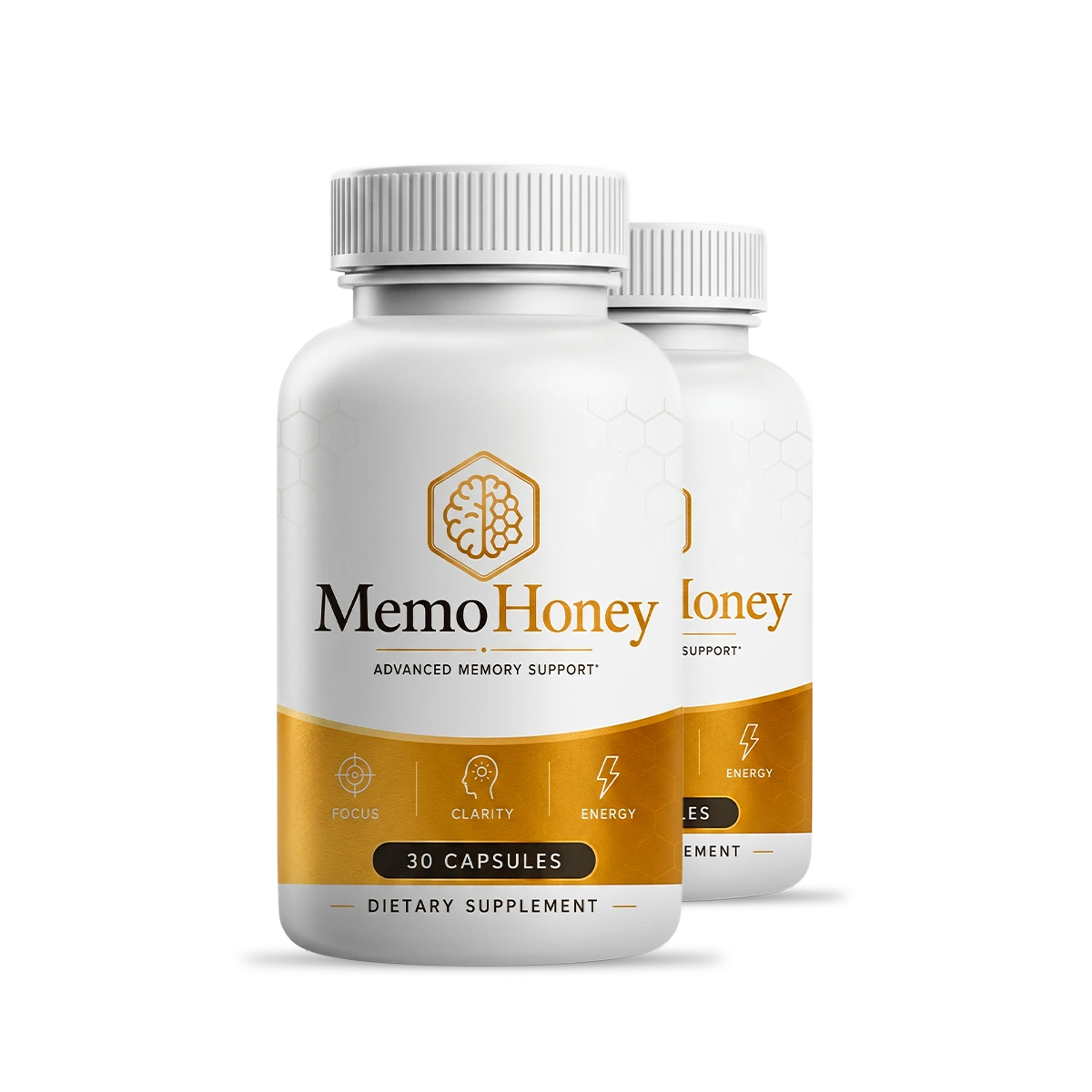
Order MemoHoney if it passes your own six questions
It fails the first two and passes the last four. 60 days from purchase, opened bottles included, is what makes the failures survivable.
Two bottles $158 · six bottles $294 · 60-day money-back guarantee
Order MemoHoney On The Official WebsiteOne capsule a day · 30 per bottle · lot MEM-26/ME-7725