MemoHoney Official Website › Blog › What One Capsule Holds
What One Capsule Can Actually Hold
A capsule is not a magic container. It is a shell with a volume, and that volume decides what a once-daily blend can and cannot contain. Doing this arithmetic once explains most of what is wrong with most of this shelf, including this bottle.
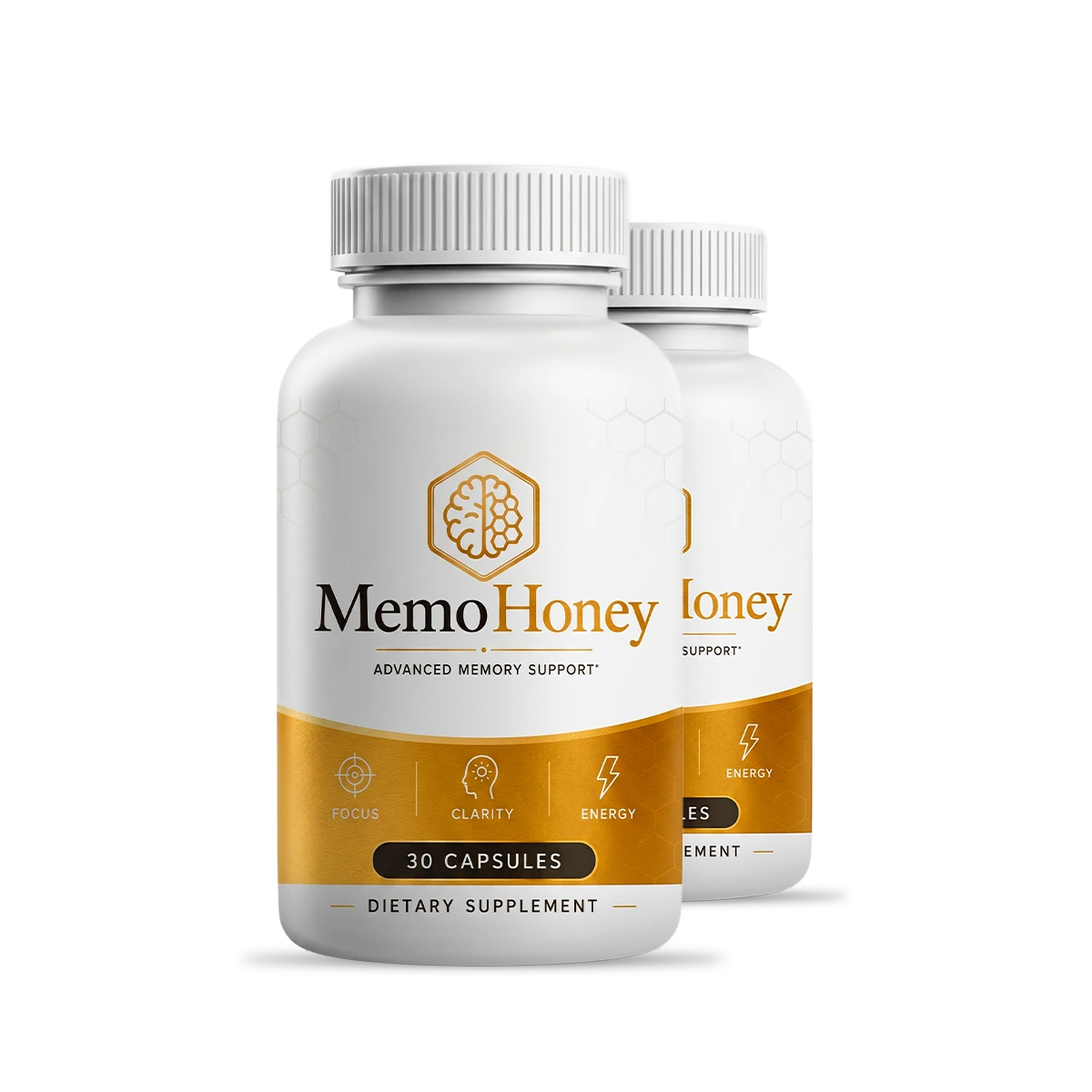
- A size 0 capsule — the common size for a blended daily supplement — holds roughly 400 to 800 mg of powder.
- That total is shared between every active in the blend plus whatever flow agent the filling machine needs.
- Several ingredient families have characteristic trial doses measured in grams a day.
- Any once-daily capsule containing six ingredients is therefore working well below those doses, whatever it contains.
- This is physics rather than an accusation, and it applies to every product of this shape.
How much a capsule holds
A shell is manufactured to a numbered size, and that number fixes how much room is inside it. Fill weight depends on the bulk density of the powder going in: a dense crystalline amino acid packs heavier than a fluffy botanical extract, so the same shell takes a different weight of each.
For a blended daily supplement the usual choice is a size 0, which most people can swallow comfortably and which takes roughly four hundred to eight hundred milligrams depending on the blend. Larger shells exist; the reason they are not used is that a size 000 is close to the limit of what an ordinary person will take every morning without complaint.
| Capsule size | Typical powder fill | What that is in context |
|---|---|---|
| Size 000 | About 1,000 mg | Very large. Difficult for many people to swallow. |
| Size 00 | About 700–900 mg | Large. Common in single-ingredient products. |
| Size 0 | About 400–800 mg | The common size for a blended daily capsule. |
| Size 1 | About 300–500 mg | Smaller, and easier to take. |
| Size 2 | About 200–350 mg | Small. Usually a single low-dose active. |
Fill weight depends on how densely a powder packs, so these are ranges rather than constants. They are a property of the shell, not a claim about any product.
That total is not all active. A capsule blend needs something to make the powder flow through a filling machine, and depending on the formula there may be an anti-caking agent, a bulking agent or a carrier in there too. Those are declared in the other-ingredients line on a label that has one.
What the trials behind these ingredients used
Now put the shelf's characteristic doses beside that number. Every figure below was read from the trial record it came from.
| Ingredient | A dose its own trials used | Capsules that would take |
|---|---|---|
| Beta-alanine | 2,400 mg/day in both cognition trials | 3 to 6, depending on fill |
| L-citrulline | 2,400 mg/day in the cycling trial | 3 to 6 |
| Citrulline malate | 8,000 mg in a single dose | 10 to 20 |
| Arginine AKG | 12,000 mg/day for seven days | 15 to 30 |
| Niacin | 16 mg RDA, 35 mg upper limit | A fraction of one capsule |
Counts assume the whole capsule is given to that one ingredient, which of course it is not: this bottle names six.
Read the right-hand column twice. The dose behind the beta-alanine cognition work alone would fill three to six capsules of this size. The arginine AKG trial — which found nothing — used twelve grams a day, which is fifteen to thirty capsules.
And those counts assume the whole capsule is given to one ingredient. A bottle naming six ingredients is dividing that same four hundred to eight hundred milligrams six ways.
Order MemoHoney knowing exactly what you are buying
A routine and a blend, not a reproduction of the studies. Sixty days from purchase with opened bottles included is what makes an unverifiable formula a bounded bet rather than an open one.
Two bottles $158 · six bottles $294 · 60-day money-back guarantee
Order MemoHoney On The Official WebsiteOne capsule a day · 30 per bottle · lot MEM-26/ME-7725
The exception, and why it matters most here
One ingredient on this bottle breaks the pattern, and it is the one worth paying attention to.
Niacin's useful range is measured in tens of milligrams. The adult RDA is 16 mg niacin equivalents a day for men and 14 for women, and the tolerable upper intake level is 35 mg a day, set on flushing as the critical adverse effect. Both of those fit inside a shared capsule without difficulty.
So niacin could genuinely be present at a meaningful amount in this product. It is also the ingredient where the missing number cuts the other way: 35 mg is a real ceiling, niacin appears in multivitamins, B-complexes, energy drinks and fortified cereal, and a reader who wants to keep their total under it cannot add up a number that is not printed.
- A capsule can hold a useful dose of a vitamin.
- A capsule cannot hold a useful dose of an amino acid whose trials ran in grams.
- A label that prints neither leaves a reader unable to tell which case applies.
- This is why an unprinted amount is a different size of problem for different ingredients.
Why powders dose in grams and capsules do not
Look at how the same ingredients are sold when nobody is trying to fit them into a shell, and the shape of the problem becomes obvious.
Beta-alanine, citrulline and citrulline malate are all sold as bulk powders, measured with a scoop, mixed into water. A scoop holds five to ten grams comfortably and nobody has to swallow it. That is why the sports literature is full of gram doses: the format those ingredients are normally taken in has no volume constraint worth speaking of.
The moment the same ingredients go into a once-daily capsule, the format imposes a ceiling that the research never had to work under. A brand facing that choice has three honest options and one dishonest one. It can use fewer ingredients at real doses. It can ask for several capsules a day. It can pick ingredients whose useful doses are small, like vitamins. Or it can keep the long ingredient list, keep the single daily capsule, and simply not print the numbers.
That fourth option is extremely common and it is not illegal. It is worth recognising for what it is, which is a formatting decision presented as a formula.
- A powder has no meaningful volume constraint. A capsule does.
- Gram-dose trials were run in the format the ingredient is normally taken in.
- Fewer ingredients at real doses is the trade a buyer can actually evaluate.
- A long list on a once-daily capsule is a promise the format cannot keep.
What this arithmetic does and does not prove
It does not prove any particular product is underdosed. Nobody outside the manufacturer knows what is in the capsule, and that includes this desk.
What it establishes is narrower and firmer. The trials that these ingredient names borrow their reputation from cannot be reproduced by one capsule a day, whatever that capsule contains. Anyone buying a once-daily blend is buying a routine and a formula, not the studies quoted in the marketing.
That is a reasonable thing to buy. It is only a problem when the marketing implies otherwise, and the way to check is to do this arithmetic on any bottle before spending.
How to run this check on any bottle
- Find the capsule size on the label, or estimate from the total blend weight if a panel gives one.
- Count the actives. Six ingredients dividing 600 mg is 100 mg each if the split is even, and it never is.
- Look up the best-known trial for the lead ingredient and find the dose.
- Divide. If the trial dose is ten times the whole capsule, the trial is not in the bottle.
- Check whether any active has a published upper limit, and whether the label prints enough to let you stay under it.
- Ask what the product is for, given all of the above. A routine may still be worth having; the studies are not what you are buying.
The one change that would settle all of this
Not a new ingredient. Six numbers.
A Supplement Facts panel with an amount beside each of the six names would let a reader compare this bottle with any other, work out the cost per active gram, add the niacin to the rest of their cupboard, and decide whether the blend is weighted the way they want. Every one of those is impossible today and all four become trivial the moment the numbers exist.
The 2023 review of over-the-counter memory supplements describes a category where the marketing runs well ahead of the trials. Printed amounts would not close that gap, but they would at least let a buyer measure it.
MemoHoney is a dietary supplement and not a treatment for anything. Memory that has changed in a way you or the people around you have noticed deserves assessment: thyroid disease, B12 deficiency, depression, sleep apnoea, untreated hearing loss and several ordinary prescriptions all present as forgetfulness and all of them are treatable. These statements have not been evaluated by the Food and Drug Administration.
The full version of this arithmetic for this specific product is in the honest dosage section of the home page, and every ingredient with the dose its own trials used is on the ingredients page.
References
- “Role of beta-Alanine Supplementation on Cognitive Function, Mood, and Physical Function in Older Adults; Double-Blind Randomized Controlled Study” — Ostfeld I, Ben-Zeev T, Zamir A, et al, Nutrients 2023;15(4):923 [PMID 36839281].
- “Oral L-citrulline supplementation enhances cycling time trial performance in healthy trained men: Double-blind randomized placebo-controlled 2-way crossover study” — Suzuki T, Morita M, Kobayashi Y, et al, J Int Soc Sports Nutr 2016;13:6 [PMID 26900386].
- “Citrulline malate enhances athletic anaerobic performance and relieves muscle soreness” — Perez-Guisado J, Jakeman PM, J Strength Cond Res 2010;24(5):1215-22 [PMID 20386132].
- “Effects of 7 days of arginine-alpha-ketoglutarate supplementation on blood flow, plasma L-arginine, nitric oxide metabolites, and asymmetric dimethyl arginine after resistance exercise” — Willoughby DS, Boucher T, Reid J, et al, Int J Sport Nutr Exerc Metab 2011;21(4):291-9 [PMID 21813912].
- Institute of Medicine (US) Standing Committee on the Scientific Evaluation of Dietary Reference Intakes. Niacin. In: Dietary Reference Intakes for Thiamin, Riboflavin, Niacin, Vitamin B6, Folate, Vitamin B12, Pantothenic Acid, Biotin, and Choline. Washington (DC): National Academies Press; 1998. Adult RDA 16 mg NE/day (men) and 14 mg NE/day (women); Tolerable Upper Intake Level 35 mg/day, set on flushing. https://www.ncbi.nlm.nih.gov/books/NBK114304/
- “Over the Counter Supplements for Memory: A Review of Available Evidence” — Hersant H, He S, Maliha P, et al, CNS Drugs 2023;37(9):797-817 [PMID 37603263].